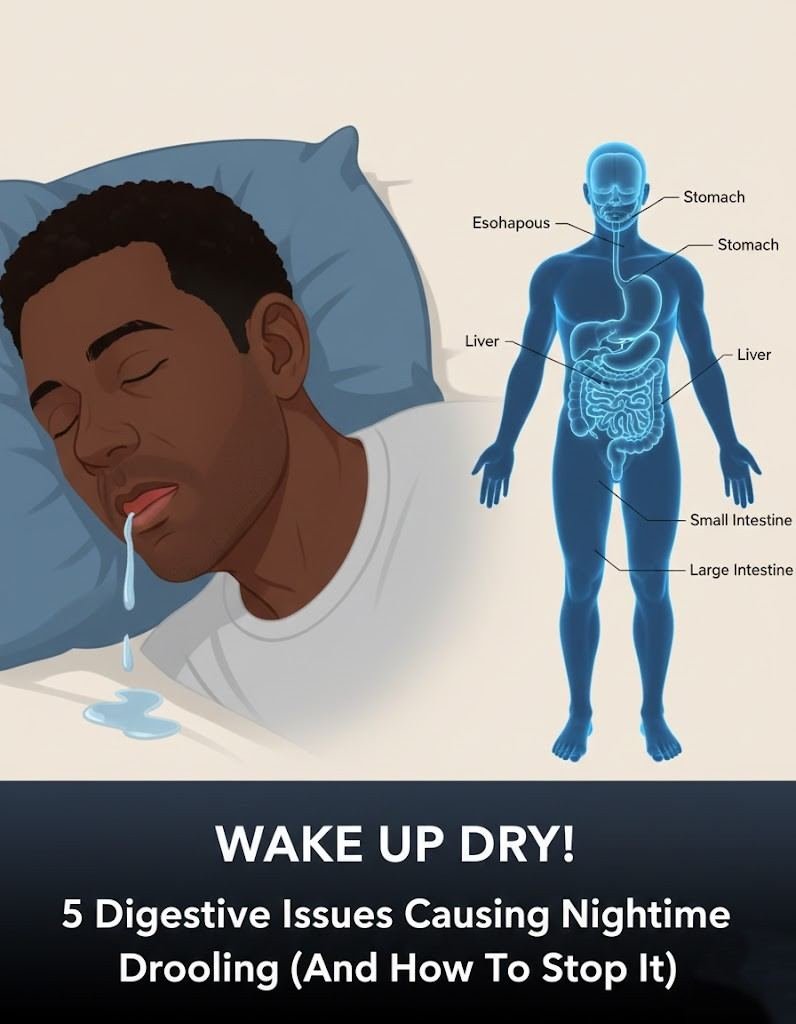
That headline is designed to scare you—it’s not a reliable medical claim as written. Drooling during sleep is actually quite common and usually harmless. However, in some cases it can be linked to underlying issues. Let’s separate fact from fear.
What drooling during sleep usually means
Most of the time, it’s caused by simple, non-dangerous things like:
- Sleeping position (especially on your side or stomach)
- Nasal congestion or allergies
- Mouth breathing
- Deep sleep/relaxed facial muscles
When it could signal something more
Persistent or excessive drooling (especially if it’s new or worsening) can sometimes be associated with certain conditions:
- Sleep Apnea
Interrupted breathing during sleep can lead to mouth breathing and drooling. - Gastroesophageal Reflux Disease
Acid reflux may increase saliva production, especially at night. - Parkinson’s Disease
Can affect muscle control, including swallowing. - Stroke
Sudden drooling with facial weakness or speech trouble is an emergency sign. - Sinus Infection
Nasal blockage can force mouth breathing. - Cerebral Palsy (more relevant in children)
Affects muscle coordination and swallowing.
When to take it seriously
You should consider seeing a doctor if drooling:
- Started suddenly without explanation
- Is severe or worsening
- Happens along with choking, gasping, or loud snoring
- Comes with neurological symptoms (weakness, slurred speech, facial droop)
- Disrupts sleep regularly
Bottom line
Drooling in your sleep is usually not a “terrifying disease warning.” It’s only a concern when paired with other symptoms or changes. That viral claim is exaggerated to grab attention.
If you want, tell me what you’re experiencing (how often, any other symptoms), and I can help you figure out whether it’s likely harmless or worth checking out.
